


A new kind of map for here.
In 2020, I did a two-week artist residency at the Banff Center for Arts and Creativity. I’d submitted a nonfiction project that I’d been working on for a few years, which I kept hitting a wall with. That first night at Banff, I mapped out what those two next weeks would look like: day by day, essay by essay. The next morning, I awoke more stuck than before. In my first 1:1 meeting that day with my mentor Gary Barwin, he smiled and said: Your only obligation is to be here. He encouraged me to stop mapping everything out. You’re saturated in psychic juice, he said. With the encouragement to loosen my grip, I scrapped that map of my time at Banff, and that night, after watching “At Eternity’s Gate,” I stared at a blank sheet of kitakana paper and thirty minutes later, my first bone map appeared. A collection of shapes that resembled an island, a reaching.
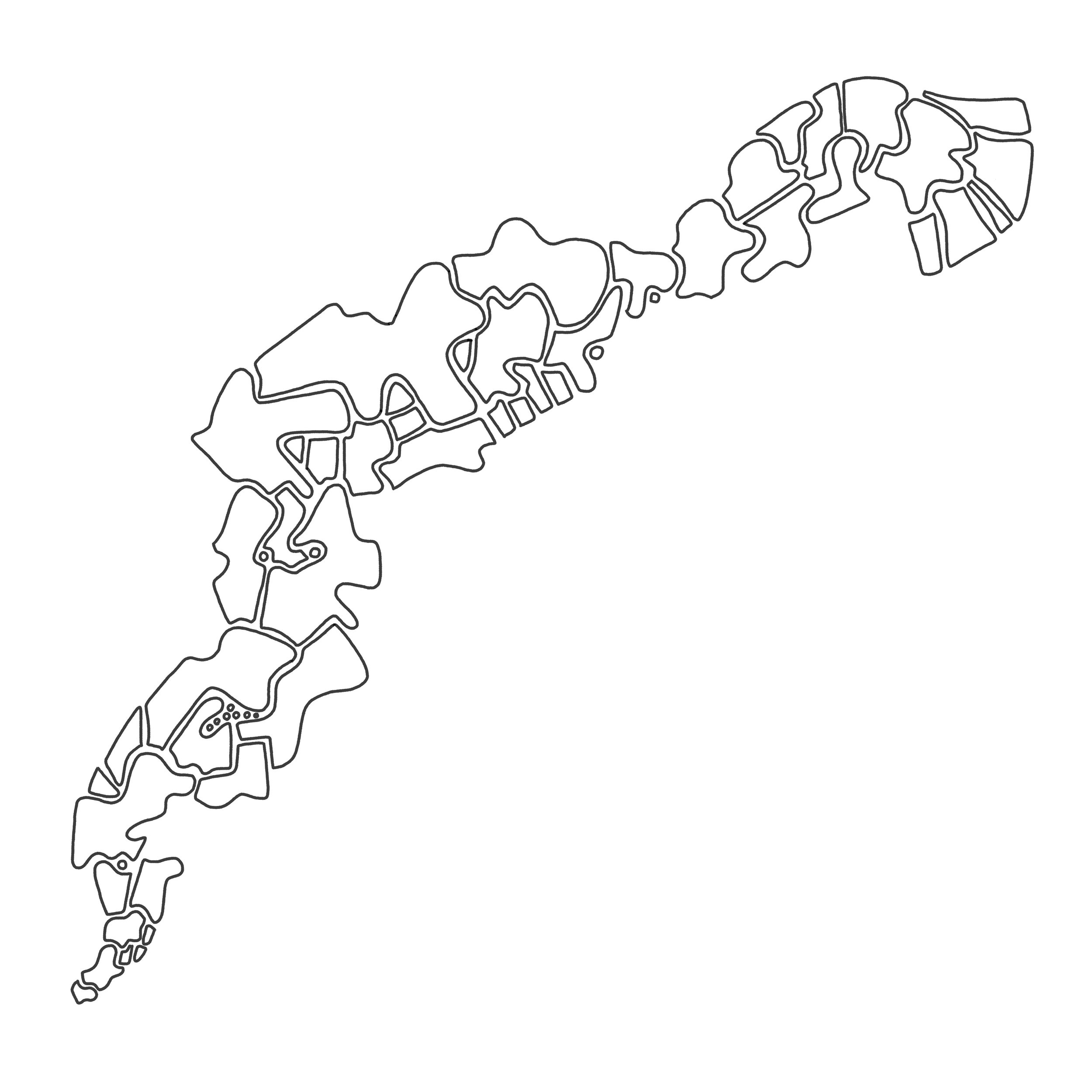
It began as dreamwork.
When I got home from Banff, I kept going. In 2020, I drew 200+ of these bone maps. It became a tool and process for me during a deep stretch of psychoanalysis: drawing from the blank space and analyzing the shapes, sounds, and memories that came up. Sort of like dreamwork, some appeared like signs while others took on the weight of symbols. I found the practice so grounding, that I continued drawing them for the next few years, experimenting with different sizes, shapes, and styles. In 2024, I began digitizing them, and in 2025, I started to consider what a narrative project would look like. At the moment, I have drawn 350+, and am at work on a prose-poetry hybrid manuscript, The Unswallowing, which you can see below. This year and next, I’m looking to create large format bone maps, with the hopes of exhibiting them.

The Unswallowing
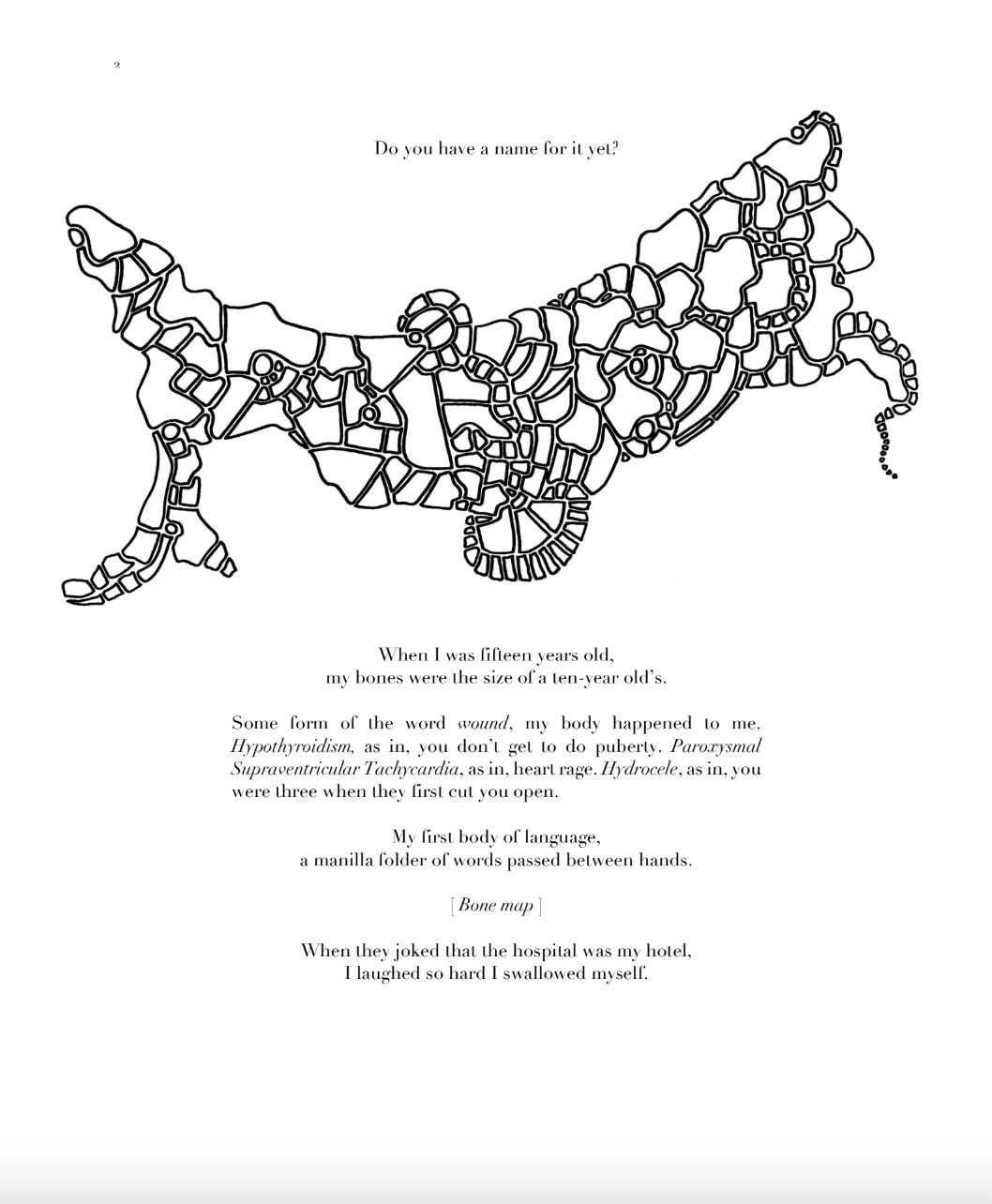
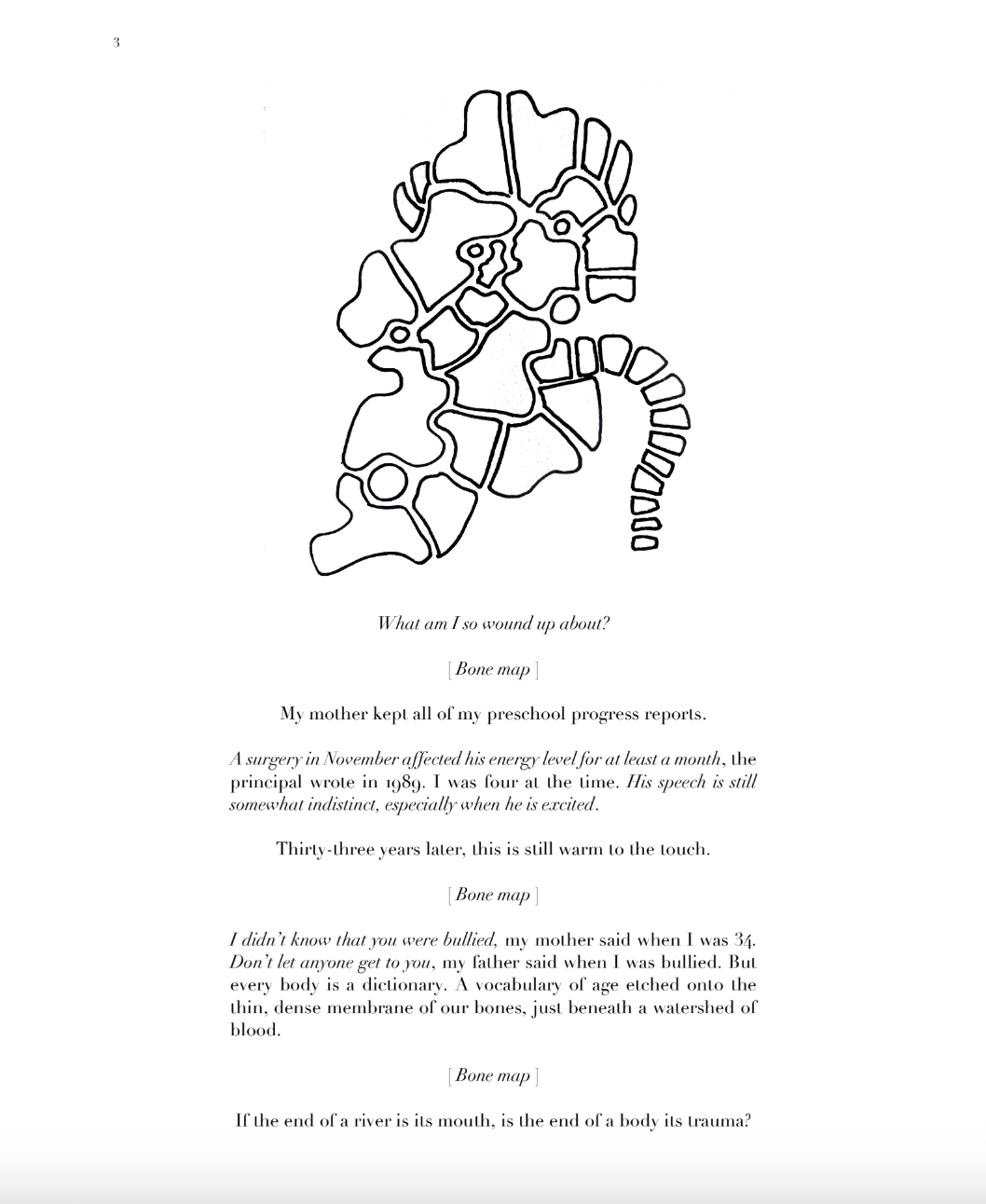
The [ bone map ] manuscript, currently titled The Unswallowing, is about recovering voice, and is split into five parts, following the five main phases of an archaeological dig: 1) Selecting the site, 2) Conducting research, 3) Excavating the site, 4) Cleaning and cataloguing the artifacts, and 5) Reporting the results. At times, it is the first ray of light to touch the collapse of story. Other times, it is the breath of recovering: a blueprint of and for our shadows. I’ve found solace and softness in this practice and process. A kind of language for the lost echos etched inside us. What does it all mean? The journey of putting it together, I am reminded, is yours.

The beginning: Narrative maps
Long before the bone maps, I was drawing what I called “narrative maps,” as I have always drawn inspiration from the wilderness, from the woods, from Big Nature. Since 2011, I’ve done around 35 endurance trail runs (from 25K to 100K organized races, as well as self-supported 30- to 50-milers). In 2016, after completing the Rim-to-Rim-to-Rim, a 42-mile self-supported run in the Grand Canyon, someone asked, “What does trail running feel like?” Later that night, during the night-shift at a law firm in NYC, where I worked for 2 years to fund my less-paid pursuits, I put pen to paper. You’ll see that 8.5 x 11” drawing to the right. A week later, on a sheet of Kitakana paper, I recreated the drawing, the route, and the rendering. These maps are not drawn to scale, but the sensation of memory. They are an illustration of what it feels like to move for an extended period of time across land.


Top Trails Seattle
In 2018, the shoe company Hoka went to major cities around the country to film endurance athletes in their natural habitats, both on and off the trails. When they came to Seattle, they featured me alongside Brian Morrison, the owner of Fleet Feet Seattle, previous Race Director for the Teanaway Country 100-Mile Race, and beloved trail runner in the Seattle community. When I moved (back) to Seattle in 2018, I worked at Fleet Feet for six months, which is when this episode was filmed. Below on the left is the video that features just me and my narrative maps, while the video on the right is the full episode — Episode 2 of Season 4 of Top Trails — with Brian, which also features my fixation with unwords, and how running fuels writing (and vice versa).
[ bone map ]
do you have a name for it?
I want to be unkept by this.
[ bone map ]
the first ray of light to touch the collapse of bone, here is the origin of echo, a shape that doesn’t exist yet. somewhere between the no longer and not yet, these shapes call to me: in the breath of recovering, unswallow me; a blueprint of and for shadow, these are wounds that do not heal; in the debris of recollection, unsettle them.
[ bone map ]
Ink on paper drawings, I started this practice in 2020 in a state of deep psychoanalysis. Some 200 later, I began to draw inference from the unthinking: I saw topographies, figures and figurines, a melding of subject and object. Renderings of narratives that don’t yet, or ever, have a language for themselves, these bone maps give silence a home, which is a place called hope.
[ bone map ]
if the body keeps the score, what do the bones keep?